Perspectives · Growth and Competitive Advantage
Where Sustainable Growth Really Comes From
Growth targets often reach marketing as a volume to be found. Sustainable growth comes from earlier choices: which customers, markets and offers to pursue, and how to win there.
The familiar approach
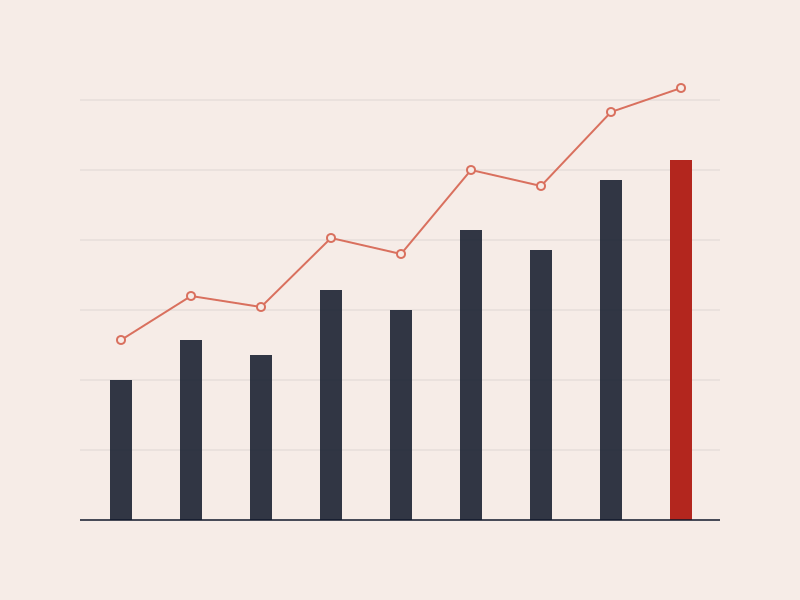
A growth target is set. It is divided across channels and campaigns, and activity is increased to meet it. The year may end on target, but the growth is often bought rather than built: discounts that erode margin, customers who do not stay, volume that is expensive to repeat.
The issue is not effort. It is that the target was treated as a number to be reached, rather than a set of choices about where the growth should come from.
Growth is made of choices
Every growth target can be traced to a small number of sources. Each depends on a strategic choice, and each needs its own kind of evidence.
| Source of growth | The choice it depends on | Evidence it is working |
|---|---|---|
| New customers | Which customers to pursue, and why they will choose you | Share of the target segment, and the value of customers won |
| Existing customers | Whether to deepen, broaden or extend the relationship | Retention, purchase frequency, cross-category purchase |
| Portfolio | What to offer, and the mix to grow | Mix of premium and core, margin by range |
| Markets | Where to compete, including new segments, channels or geographies | Share and profitability in the chosen market |
| Brand and positioning | Why the business is chosen, and at what price | Preference in target segments, price premium sustained |
In the Commercial Value Cascade, these choices sit at the level of growth strategies, between marketing’s strategic intent and the go-to-market plans that deliver it. Each strategy carries part of the agreed contribution, its own investment case and its own evidence.
Quality matters as much as quantity
Not all growth is equal. Revenue won through deep discounting, or from customers who do not return, can flatter the top line while weakening the business. Sustainable growth improves the quality of revenue: better margins, longer customer relationships and a stronger competitive position.
What to do about it
- Break the growth target into its sources. Agree how much is expected from new customers, existing customers, portfolio and markets, and why.
- Choose deliberately, and say what you will not pursue. Focus is a strategic decision. Spreading effort across every possible source rarely wins any of them.
- Judge growth on its quality. Report margin, retention and customer value alongside revenue.
- Match investment to the source. Winning new customers, deepening existing relationships and shifting portfolio mix need different investment, over different horizons.
- Build the case with Finance. A shared view of where growth will come from is easier to fund, and easier to defend when conditions change.
Where it gets difficult
The sources interact. Brand strength affects customer acquisition; portfolio choices affect retention. Separating them is a matter of judgement, not precision.
Some sources build slowly. Repositioning a brand or entering a new market may take more than one planning cycle to show results. The case needs to say so.
Organisations are structured differently. Growth sources often cut across product, sales and marketing teams. Agreeing them means agreeing who is accountable for what.
Closing
Sustainable growth is rarely found by doing more. It comes from choosing well, investing behind those choices and judging the results on their quality. A Strategic Review tests whether a growth plan is built that way, and the Marketing Value Programme builds the discipline into planning.
Dr Karen Hanvik
Strategic Marketing Value System® is a registered trade mark of Dr Karen Hanvik. © 2026 Dr Karen Hanvik.